One In The Sheath
Technical Game Designer
Team Size : 3 People
January 2025 - February 2025
A score-attack action game. Both you and your enemies will die from a single attack. Using your dash-attack spends a resource that can be regained by killing enemies or parrying projectiles.

____________________________________________________________________________________
Responsibilities :- Setup a token system for enemy attacks to ensure only a set number of enemies can attack at once
- Tweaked visual elements such as animation timing & hitstop to achieve satisfying combat without compromising responsiveness
- Wrote a gameplay document outlining the core pillars, player actions, and objectives
- Implemented UI motion for bars, hover states, and skill notifications
____________________________________________________________________________________
Keep Moving Forward
- Enemy projectiles can be parried by a well-timed attack so rather than dodging their attacks, it makes more sense to dash through them instead.
- Dashing spends a dash charge and only by getting a kill or parry can you regain your dash charge. I figured that if we put the dash on a cooldown after being used, some players might run away and wait out the cooldown timer rather than playing risky.
- Additionally, successful offensive actions can be canceled into other offensive actions (Ex. After attacking an enemy you can cancel the recovery animation by immediately dashing).
- It is also very beneficial to maintain a combo because having a higher multiplier means each kill or parry will earn you more score.
- The combo timer does get shorter the higher your combo gets but the further into the game you get, more enemies will spawn and they move faster. In this way even though it becomes more difficult to survive later on, it actually gets easier to build up a large multiplier.
____________________________________________________________________________________
Game Feel
____________________________________________________________________________________
Token System
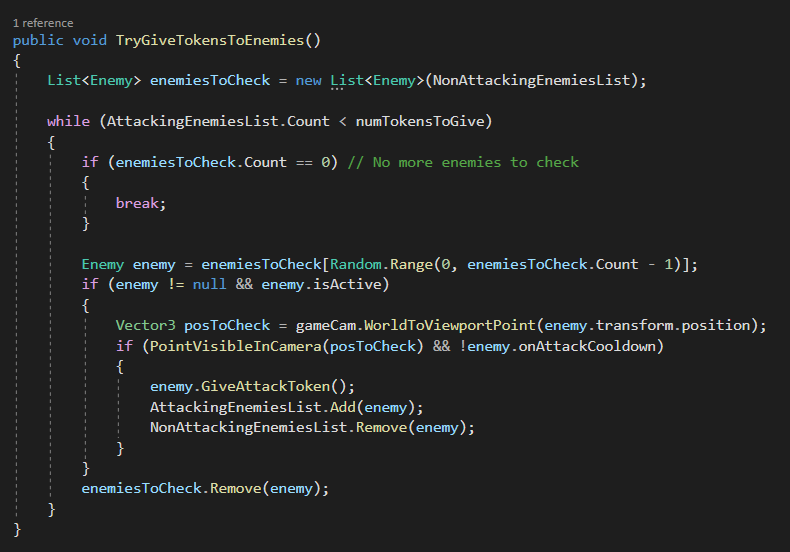
Want to see my code samples from the project, they are here : One In The Sheath Code Samples.
Or if you'd like to play the game yourself, here is the Itch.io Page.